- Published on
Sistem Administrasi Terpadu untuk Rukun Tetangga (SatuRT)
- Authors

- Name
- Putra Zakaria Muzaki
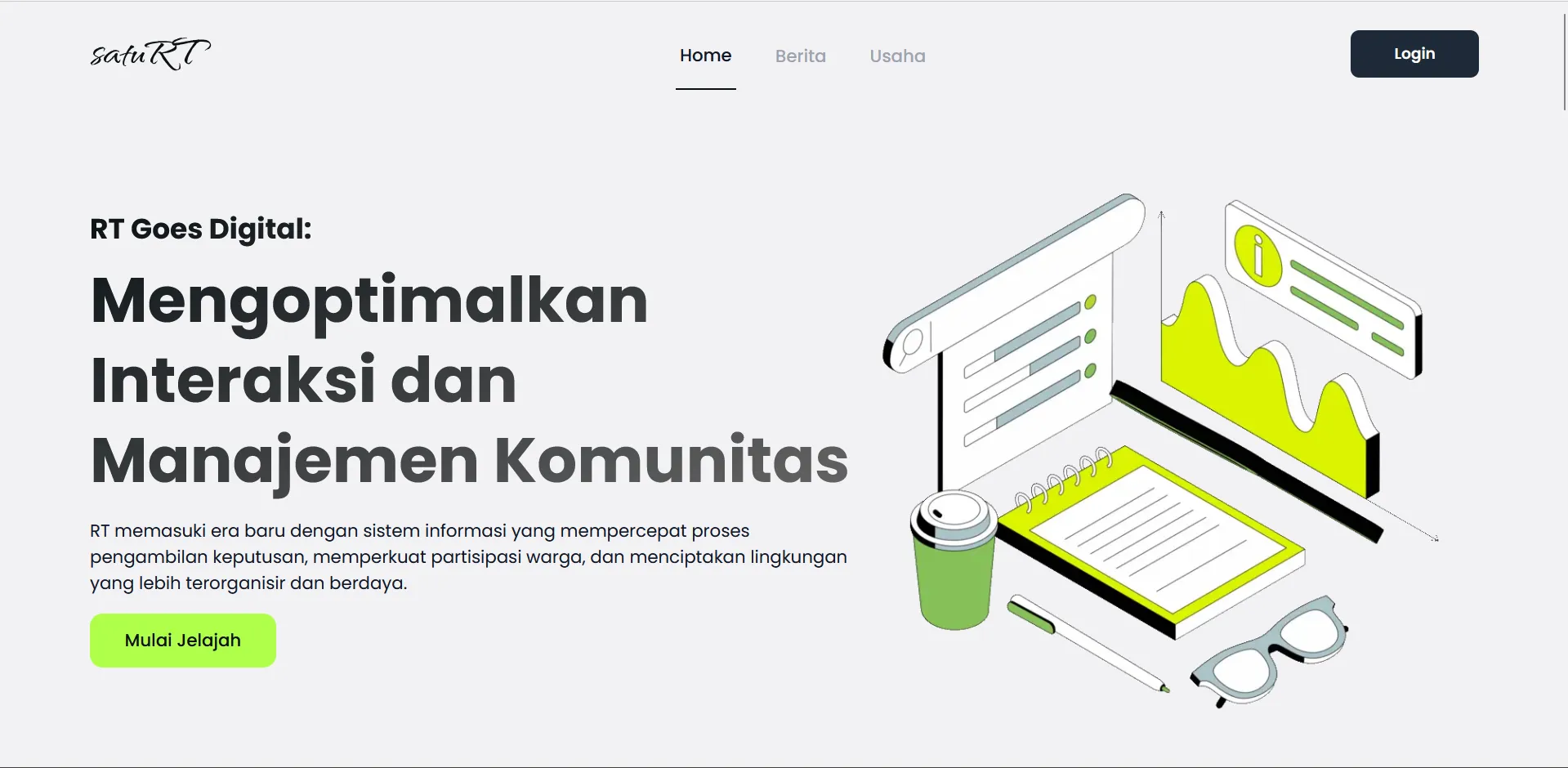
Sistem Administrasi Terpadu Untuk Rukun Tetangga (SatuRT)
SatuRT is a Management Information System designed to integrate various aspects of administration at the Neighborhood Association (Rukun Tetangga) level. Specifically developed for RT 01 RW 03, Tanjungsekar Village, Lowokwaru District, Malang City, this platform aims to digitize manual processes, creating a more harmonious and responsive environment.
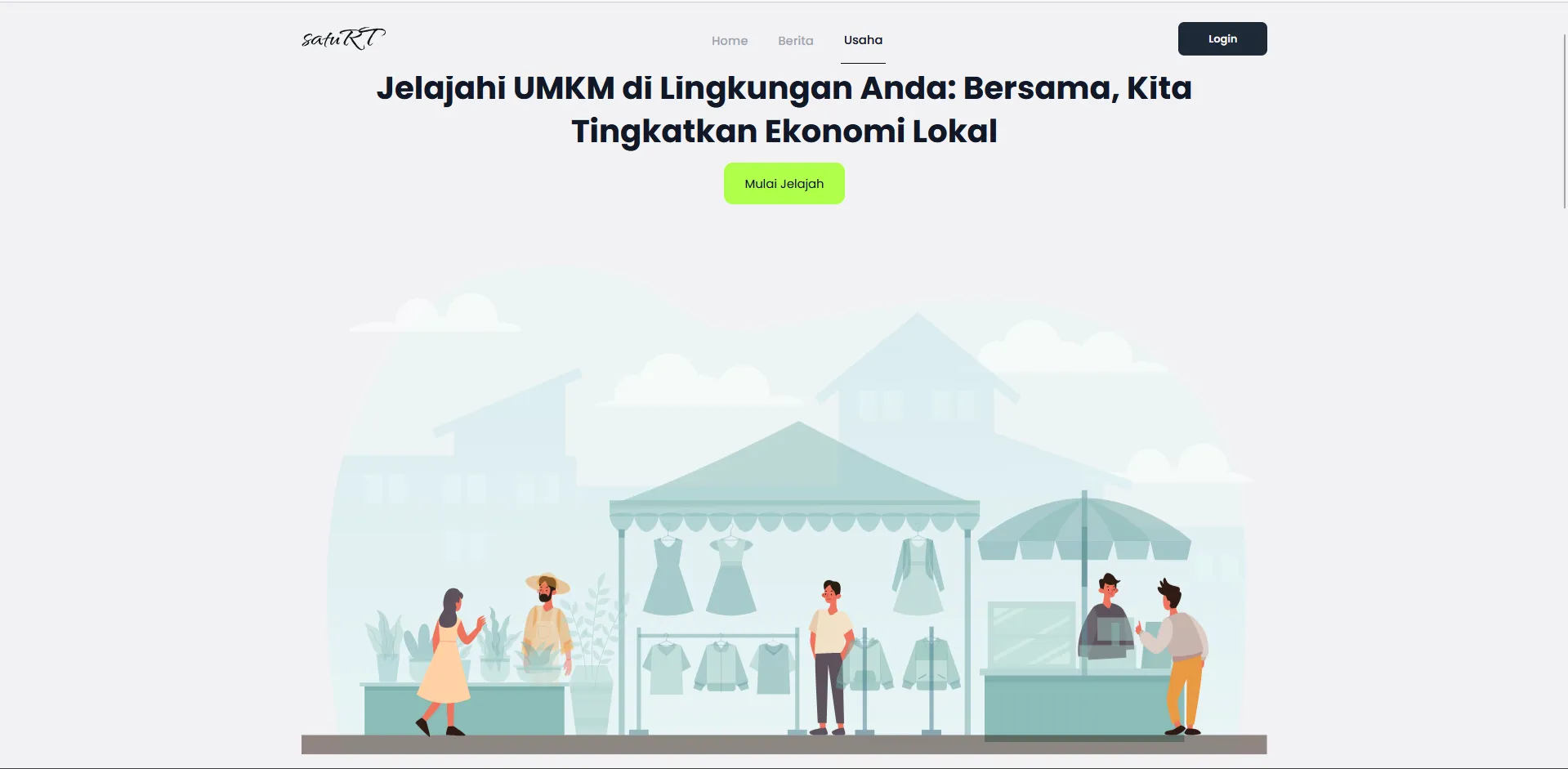 Figure: The SatuRT Landing Page featuring the 'RT Goes Digital' concept.
Motivation & Objectives
The primary goal of SatuRT is to facilitate the RT management team in recording resident data, managing finances, and organizing community activities more effectively. Additionally, the system aims to:
- Improve communication and reporting between residents and RT officials.
- Enable rapid and efficient information dissemination.
- Facilitate problem reporting or complaints from residents for immediate follow-up.
System Actors
The system is divided into two main actors, each with specific roles:
- Ketua RT (Admin): Responsible for managing resident data, finances, inventories, letter requests, and decision-making regarding event priorities.
- Penduduk (Residents): Can view personal info, access event schedules, request administrative letters, report issues, and view local MSMEs (UMKM).
Key Features

1. Dashboard & Administration
The dashboard provides a summary of vital statistics, including total residents, family cards, pending document requests, and the current RT financial balance. It also visualizes financial trends over the last 5 years.
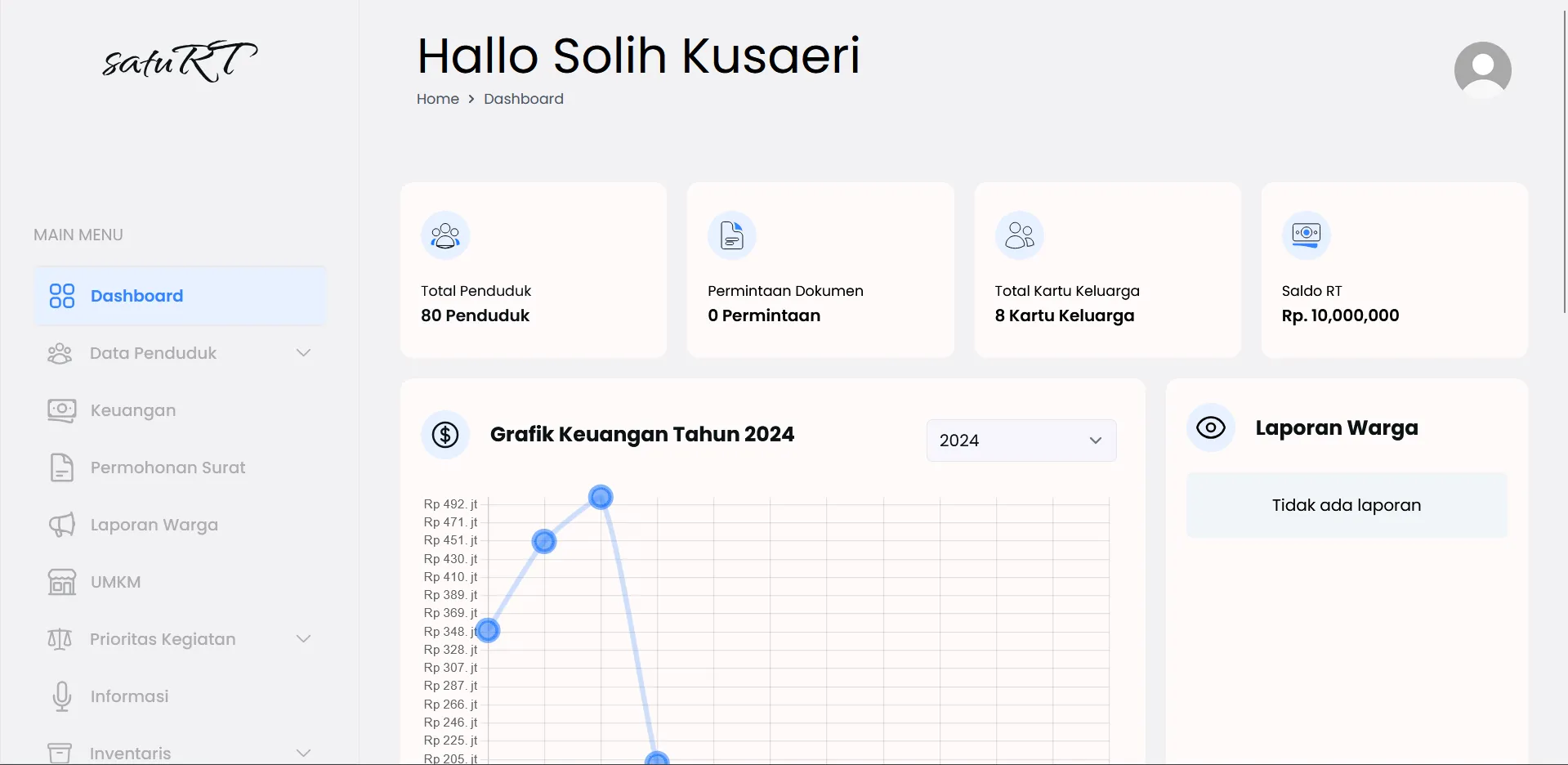
Figure: The Admin Dashboard showing financial transparency.
2. Financial Management
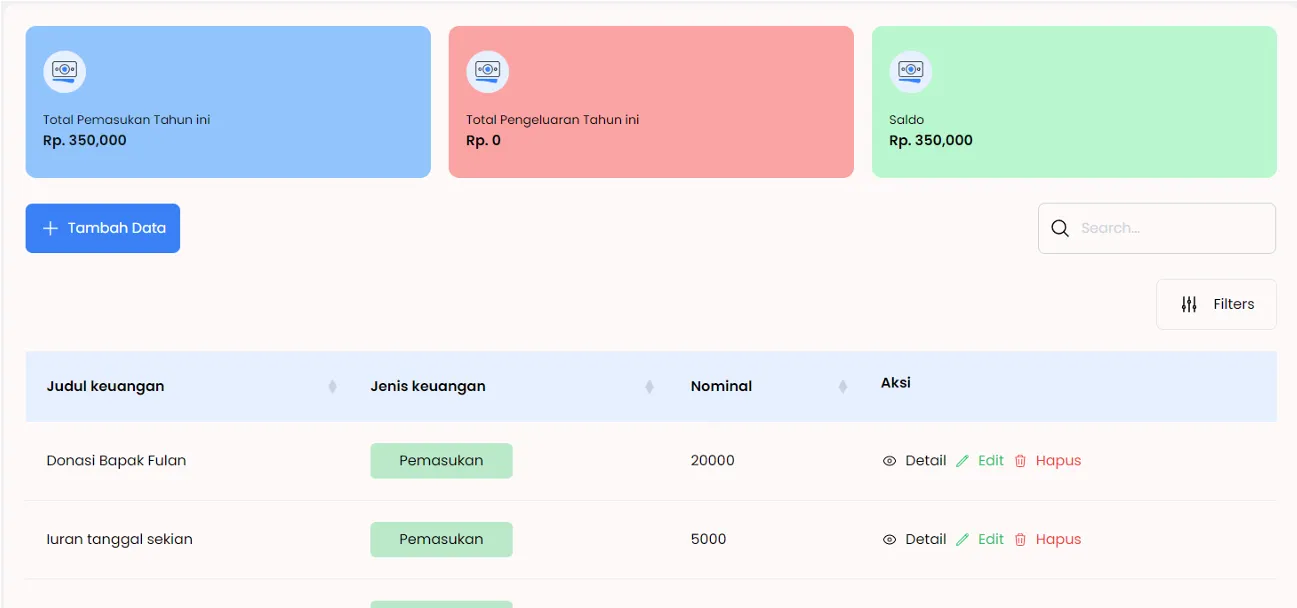 Transparency is a core tenet of SatuRT. The system allows the Head of RT to manage income, expenses, and balances. Residents can view financial reports and transparency graphs directly from their dashboard.
3. Letter & Document Requests
Residents can request administrative documents (e.g., cover letters) online. The system streamlines the approval process, allowing the Head of RT to approve or reject requests digitally.
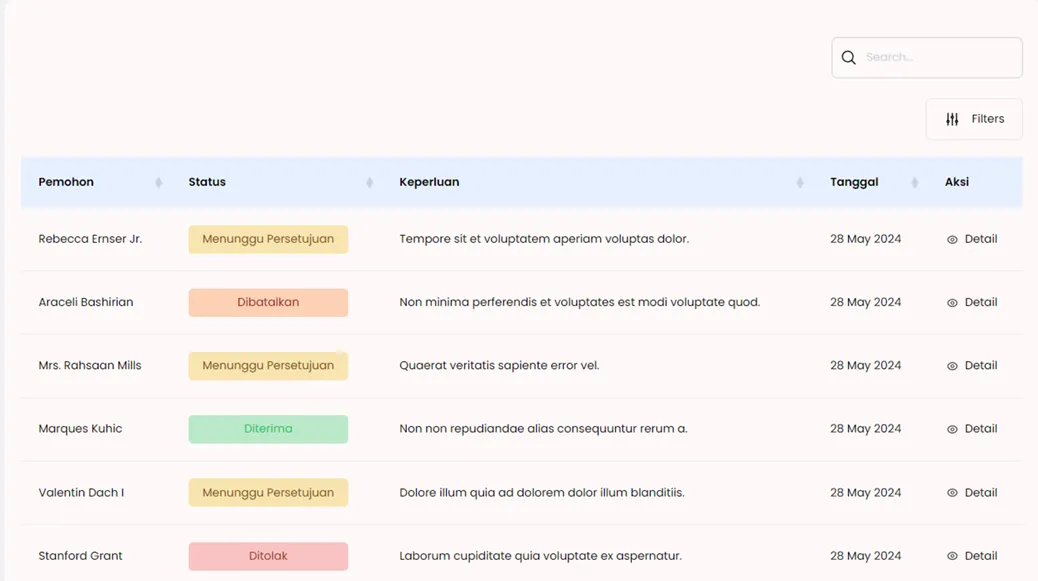 Figure: Detail view of a letter request with options to approve or reject.
4. Inventory Management
The system tracks communal property (inventaris). Admins can add items (e.g., Keyboards, Laptops, Tents), manage stock, and track loan status (Borrowed/Returned).
5. Local Business (UMKM) Support
SatuRT supports the local economy by listing Micro, Small, and Medium Enterprises (UMKM) within the neighborhood. It displays business owners, descriptions, and locations to help promote local products.
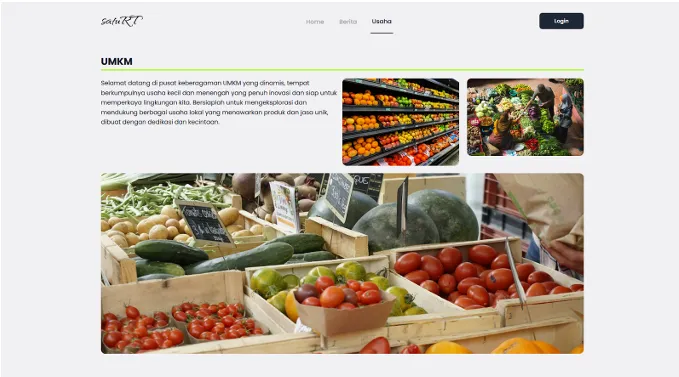 Figure: Catalog of local businesses registered in the RT.
6. Citizen Reporting (Lapor!)
Residents can submit complaints, criticisms, or suggestions. These reports are tracked with statuses (e.g., "Waiting for Approval") and can be followed up by the RT administrators.
Decision Support System (SPK)
 Figure: Decision Support System for community activities in the RT.
A unique feature of this project is the integration of a Decision Support System (SPK) to determine the priority of community activities. The team implemented five different methods to calculate priorities based on criteria like Relevance, Social Impact, Committee Count, Cost, and Difficulty.
The implemented methods are:
- ELECTRE
- ARAS
- MOORA
- SAW
- SMART
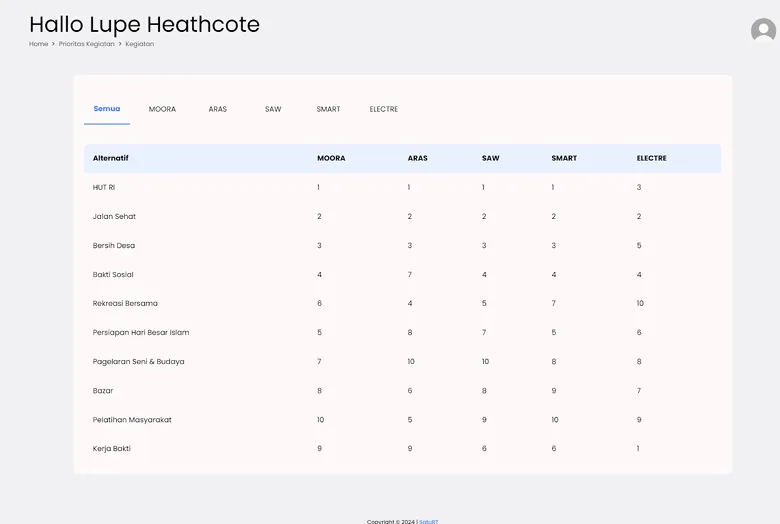 Figure: Comparison of event priorities.
Database Design
The system uses a relational database to manage the complex interactions between residents, families, accounts, finances, and inventory.
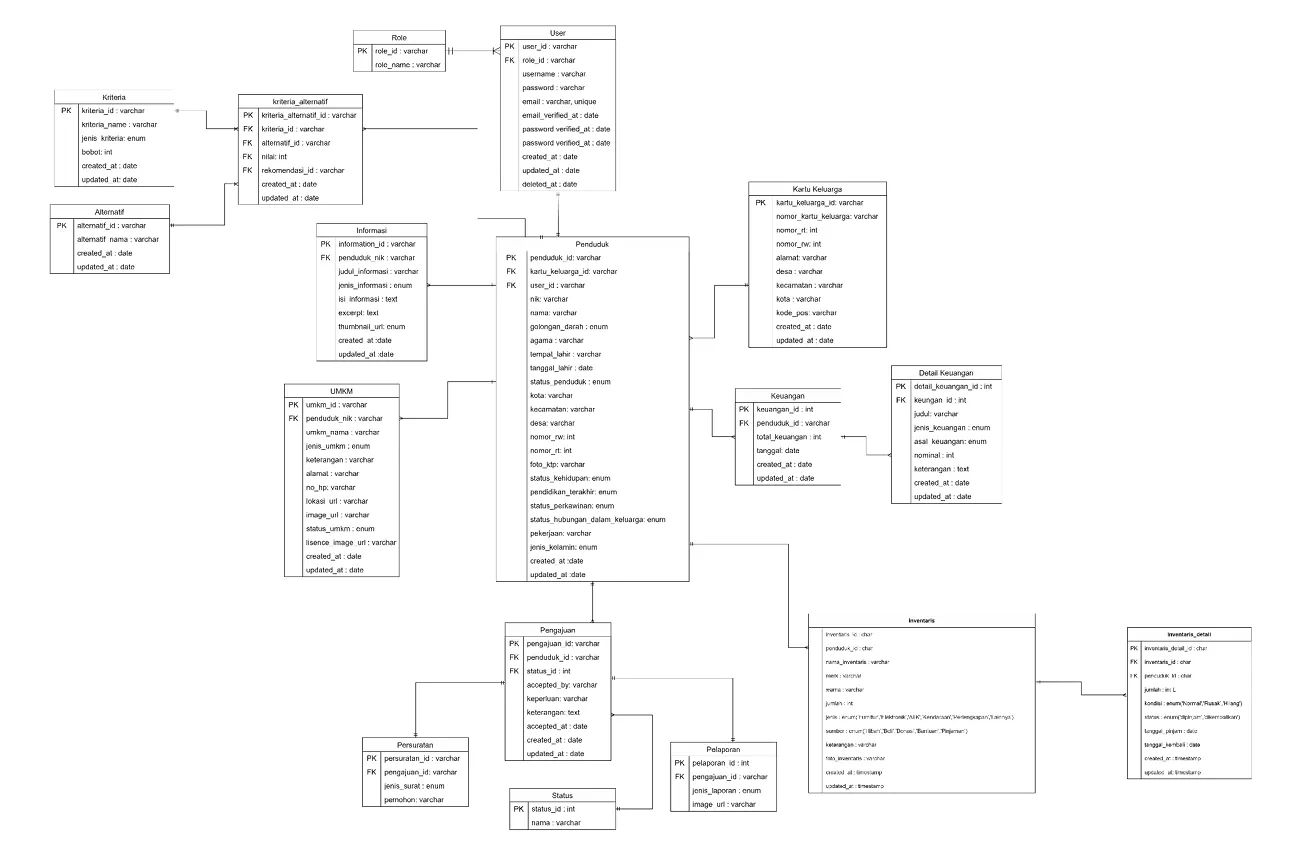 Figure: Entity Relationship Diagram (ERD) of the SatuRT system.
The Team
This project was developed by Group 4 of the D4 Informatics Engineering program at Politeknik Negeri Malang (2023/2024):
- Achmad Raihan Fahrezi Effendy
- Eddo Dava Alfarisi
- M. Fathurrozak Al Qoroni
- Putra Zakaria Muzaki
- Vunky Himawan